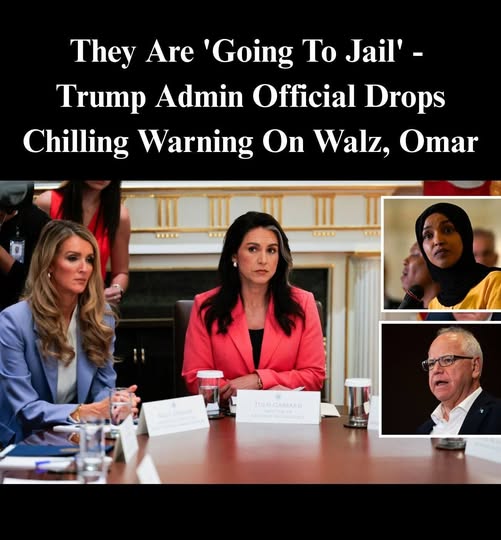
SBA’s Loeffler Notes That Minnesota Fraud May Reflect a Wider Problem
The warning was blunt—and it was broadcasted across national television networks, capturing the attention of policymakers, media, and the general public alike.
SBA Administrator Kelly Loeffler did not mince words when discussing the recent revelations out of Minnesota. Describing the billion-dollar fraud scandal as “just the tip of the iceberg.”
Discover more
Met Gala Tickets
Gala Event Planning
Met Gala Memorabilia
News subscription services
Met Gala
Designer Dresses
Children’s charity donations
Cancer research donations
Missing persons awareness items
Celebrity Fashion Guide
Discover more
Fashion accessories Met Gala
Met Gala History
Kidman Style Inspiration
Celebrity Gossip Magazine
Hair Styling Tutorials
Fashion News Subscription
Met Gala Tickets
Met Gala
celebrity
Children’s charity donations
Loeffler signaled that the issues uncovered may represent only a fraction of a broader, systemic problem that could stretch across multiple states. The phrasing alone hinted at a looming cascade of discoveries, investigations, and prosecutions that might fundamentally challenge public confidence in government relief programs, particularly those implemented during the COVID-19 pandemic.
According to Loeffler, investigators acted swiftly to examine anomalies in Small Business Administration loans issued as part of pandemic relief efforts. These programs, including the Paycheck Protection Program (PPP) and Economic Injury Disaster Loans (EIDL), were designed to provide immediate financial support to businesses struggling to survive during unprecedented economic disruptions.
Yet, preliminary investigations revealed that these programs had been exploited at an alarming scale. Nearly 7,900 loans and approximately 6,900 individuals are now under federal scrutiny, pointing to a massive breakdown in oversight and compliance mechanisms.
The scope of the fraud is extraordinary, encompassing not only business owners but also consultants, intermediaries, and others who may have facilitated improper applications for financial gain. Loeffler emphasized the seriousness of these findings, promising that those implicated would face strict consequences.
Discover more
Fashion Event Coverage
News subscription services
Kitchen gadgets and tools
Movie memorabilia classic films
Children’s charity donations
Fashion accessories Met Gala
Luxury Fashion Brands
Health and wellness products
Kidman Style Inspiration
Beauty and skincare products
Individuals found guilty of fraud will be barred from participating in any future SBA programs, effectively cutting them off from government-backed business assistance indefinitely. Moreover, all cases deemed criminal in nature will be referred for federal prosecution, setting the stage for a wave of court proceedings that could take years to fully resolve.
Legal experts warn that the magnitude of potential prosecutions may rival some of the largest white-collar crime investigations in recent history, highlighting the complexities of tracing financial transactions and proving intent in cases of mass-scale fraud. While the Minnesota revelations dominate headlines, Loeffler’s statements suggested that this may only be the opening chapter.
Federal investigators are reportedly reviewing patterns of PPP and EIDL disbursements in multiple states, seeking signs of similar irregularities. If comparable fraud is uncovered elsewhere, the scandal could expand into a nationwide reckoning over pandemic-era relief spending.
Discover more
Online movie streaming services
Luxury Fashion Brands
Celebrity biography books
Fashion News Subscription
Movie memorabilia classic films
Children’s charity donations
Hair Styling Tutorials
Beauty and skincare products
Golf equipment Tiger Woods
Kitchen gadgets and tools
This possibility has drawn concern from both legislators and the public, who fear that a widespread breach of trust could undermine future emergency programs designed to provide rapid economic support in times of crisis. Amid this backdrop, political figures have been drawn into the controversy, none more prominently than Representative Ilhan Omar of Minnesota.
Omar’s involvement arises largely from legislation she supported, most notably the Meals for Every American Learner Support (MEALS) Act, which was passed with bipartisan support in response to school closures during the COVID-19 pandemic. The act was intended to provide essential nutrition to children who relied on school meal programs, a public health and social necessity.
Yet critics now argue that certain provisions of the legislation, combined with administrative oversight gaps, inadvertently created opportunities for abuse. They contend that funds intended for child nutrition were diverted or misused in conjunction with the Feeding Our Future case, a federal investigation and prosecution targeting widespread misappropriation of pandemic relief funds.
The controversy surrounding Omar has intensified political scrutiny. Allegations that individuals within her political orbit benefited from fraudulent schemes have been highlighted in partisan commentary, further complicating public perception of legislative intent.
While a former staffer associated with her office has been convicted for crimes connected to the broader fraud scheme, it remains critical to distinguish between deliberate criminal acts and legislative efforts aimed at addressing urgent societal needs.
The case has sparked national debate over where accountability lies—between legislators, administrators, and those who actively commit fraud.
Experts note that the Minnesota scandal illuminates broader systemic vulnerabilities. Many of the pandemic relief programs were designed and deployed at unprecedented speed, prioritizing rapid economic intervention over extensive verification procedures.
While speed was necessary to mitigate economic damage, it created exploitable gaps that sophisticated actors could manipulate. Investigators have traced complex networks of shell companies, falsified documents, and third-party facilitators who leveraged these gaps for financial gain.
These findings not only raise questions about the robustness of emergency program design but also about the mechanisms by which government agencies ensure compliance and accountability. Beyond legal ramifications, the scandal has social and political consequences.
Public trust in federal relief programs has been shaken, and calls for reform have intensified. Lawmakers across party lines have emphasized the need for stricter oversight, enhanced verification procedures, and clearer reporting structures to prevent future abuse.
For the American public, who witnessed both the urgency of pandemic relief efforts and the resulting vulnerabilities, the Minnesota scandal serves as a cautionary tale: even well-intentioned programs can be exploited if administrative safeguards fail or if oversight is insufficient.
As federal prosecutions move forward, the Minnesota fraud scandal has become more than a state-level investigation—it has evolved into a case study on the complexities of emergency government relief programs.
Discover more
Health and wellness products
Hair Styling Tutorials
Online movie streaming services
Cooking recipe books
News subscription services
Fashion Event Coverage
Gala Event Planning
Fashion accessories Met Gala
Met Gala History
Missing persons awareness items
Legal analysts note that while the criminal cases will unfold over months, if not years, the broader consequences for policy, public trust, and governance are immediate.
Prosecutors face the challenge of untangling an intricate web of financial transactions, shell companies, and falsified documentation, all of which were facilitated by gaps in administrative oversight during the rapid rollout of pandemic relief initiatives.
Each case highlights not only individual wrongdoing but also structural vulnerabilities that must be addressed to prevent future abuses. For Representative Ilhan Omar, the political ramifications are substantial.
Although her MEALS Act was designed with a humanitarian focus—to ensure children continued to receive essential nutrition during school closures—the connection between legislation and the Feeding Our Future fraud case has been seized upon by political opponents.
Critics argue that provisions in her legislation may have inadvertently enabled misuse of funds, even if the legislation’s intent was wholly benevolent. The conviction of a former staffer tied to her office has intensified these attacks, providing fuel for partisan narratives that question accountability and oversight.
While the legal responsibility of elected officials remains a separate matter from the criminal conduct of staffers, public perception is often less nuanced, and the political stakes are high.
The situation has sparked a broader conversation about legislative and administrative responsibility in the context of emergency programs. Experts emphasize the need to differentiate between three distinct components: legislative intent, administrative execution, and deliberate criminal acts.
Legislative intent in the MEALS Act focused on providing essential resources to vulnerable populations. Administrative execution, however, was constrained by the urgency of pandemic conditions and the sheer volume of applications processed in short order.
Discover more
Celebrity Gossip Magazine
Hair styling products Nicole Kidman
Health and wellness products
Met Gala
Celebrity gossip magazines
Golf equipment Tiger Woods
WordPress website themes
Fashion Event Coverage
Red Carpet Fashion
Gala Event Planning
Deliberate criminal acts, meanwhile, exploited these gaps for personal financial gain. Understanding these distinctions is crucial for both policymakers and the public, yet in the charged environment of modern politics, nuance is often lost in the clamor of outrage and partisan rhetoric.
The national implications of the Minnesota case are significant. SBA loans and pandemic relief programs were implemented nationwide, and preliminary reviews suggest that similar patterns of fraudulent activity may exist in other states.
This raises the possibility that Minnesota is only the beginning of a larger investigation that could span the country, exposing widespread vulnerabilities in emergency relief mechanisms. Government agencies may face increased pressure to implement stricter verification processes, strengthen auditing and compliance protocols, and increase transparency in how funds are allocated and monitored.
These measures aim to prevent abuse while maintaining the ability to respond rapidly in future crises, striking a delicate balance between oversight and operational efficiency.
Meanwhile, public confidence in government relief programs has been shaken. Citizens who witnessed the speed and necessity of pandemic support now confront reports of extensive fraud, prompting questions about the effectiveness of oversight and the potential for mismanagement.
Lawmakers and advocates alike stress the importance of rebuilding trust through accountability and tangible reforms. For many Americans, the scandal underscores a central tension in public policy: how to provide rapid assistance in times of crisis without creating opportunities for exploitation.
The Minnesota case exemplifies the consequences when that balance is disrupted. The human dimension of the scandal also cannot be overlooked. Families and communities that depended on legitimate pandemic relief programs experienced confusion, delays, and uncertainty as investigators worked to identify fraudulent claims.
Businesses that acted in good faith may have faced increased scrutiny, slowed processing, or administrative hurdles as a result of the broader crackdown. Meanwhile, individuals implicated in the fraud face potential criminal prosecution, restitution obligations, and lasting reputational damage.
The stakes are profound, reflecting not only financial loss but also the broader societal cost of eroded trust in essential public institutions. For political observers, the controversy surrounding Representative Omar illustrates how quickly legislative initiatives can become entangled in narratives of accountability and blame.
Discover more
Travel guides Washington DC
Gala Event Planning
News subscription services
Health and wellness products
Kitchen gadgets and tools
Met Gala
Celebrity Hairstyle Products
Children’s charity donations
Luxury Fashion Brands
Missing persons awareness items
Even policies enacted with widespread support and clear public benefit are vulnerable when administrative failures or criminal acts expose systemic weaknesses.
The MEALS Act, while achieving its primary goal of feeding children during school closures, now exists in the public narrative alongside allegations of misuse, demonstrating the complex interplay between intention, execution, and perception in public governance. As federal investigations continue, analysts predict a cascade of legal, political, and administrative consequences.
Criminal prosecutions may lead to convictions, fines, and bans from future participation in SBA programs for those involved in fraud. Administrative reviews could prompt reforms in program design, compliance oversight, and verification procedures.
Politically, elected officials may face scrutiny over their role in creating legislative frameworks that facilitated rapid disbursement of emergency funds, even if unintentional.
The unfolding developments will likely influence public policy debates for years to come, shaping how future emergency programs are designed and implemented across the United States.
Ultimately, the Minnesota fraud scandal serves as a reminder of the delicate balance between speed and security in government programs. Emergency relief measures are vital in times of crisis, yet rapid implementation without sufficient safeguards can leave the door open to abuse.
The lessons learned from Minnesota are likely to inform both policy and practice nationwide, emphasizing the need for transparent procedures, diligent oversight, and clear accountability mechanisms.
The scandal also highlights the critical importance of separating criminal behavior from policy intent, ensuring that well-meaning legislation is not unduly maligned while holding perpetrators fully accountable for their actions.
For the American public, the unfolding story is a lesson in vigilance and civic engagement. Understanding the nuances of legislative intent, administrative oversight, and individual accountability helps citizens navigate complex crises with greater clarity.
At the same time, the scandal underscores the importance of robust institutional safeguards to protect public resources and maintain confidence in government programs.
Minnesota may be the first headline, but the reverberations of this investigation will likely be felt across the nation, shaping not only emergency relief efforts but also broader conversations about trust, governance, and accountability in the twenty-first century.